Nursery textiles • Materials and care
A Nursery Textile Guide to Breathable Knits and Gentle Care
A nursery layer can look simple—a blanket, a knitted garment, a soft cover—but its comfort depends on several decisions working together. Fiber, stitch, weight, finishing, and laundering all influence how a textile feels and performs. Understanding those details helps caregivers choose materials thoughtfully, care for them with confidence, and keep safe-sleep guidance at the center of every decision.
Published November 16, 2026
The quiet work of a nursery layer
Nursery textiles do more than soften a room. A small blanket may accompany a family through stroller walks, visits, and quiet time; a knit garment may need to feel comfortable against skin while allowing easy movement. Each use places different demands on the fabric. A useful layer should feel appropriate for its purpose, suit the surrounding temperature, and tolerate the care routine a busy household can realistically maintain.
That is why “soft” is only a starting point. A textile’s handle—the way it feels in the hand—can be shaped by fiber fineness, yarn construction, stitch structure, and finishing. Breathability and warmth are affected by how much air a fabric holds and how readily moisture can move through it. Care instructions matter, too: a textile that requires careful handling may be less practical for frequent use than one designed for routine washing.
Organic cotton knits and alpaca blends offer a useful comparison. Cotton is commonly valued for its familiar, breathable feel and practical care options, while alpaca is often associated with lightness and warmth. Neither fiber is automatically best for every nursery textile. The right choice depends on the item, its intended setting, the maker’s instructions, and the family’s needs.
Fiber labels: what they can—and cannot—tell you
A fiber label gives a concrete starting point for understanding a textile. “Organic cotton,” for example, identifies the fiber and its agricultural standard when supported by an applicable certification. It does not, on its own, explain how thick the knit is, how warm the finished item feels, or how it should be used. A cotton blanket can be airy or substantial depending on the yarn, stitch, and finishing.
For nursery textiles, cotton’s familiar advantages include a smooth, breathable feel and the possibility of straightforward laundering. Organic cotton may appeal to families interested in how fiber is grown and processed; a certification such as GOTS provides a framework for assessing specified environmental and social criteria across certified textile production. It is sensible to read the precise product label rather than infer details from a broad description of the material.
Alpaca fiber is lighter in feel than many people expect from a warm animal fiber. In a blend, it can contribute softness and insulation, while cotton can add breathability and structure. The exact proportions matter. So does the finished fabric: a loosely constructed textile and a dense, compact knit made from similar fibers will not behave identically. A blend’s care needs may also differ from those of a cotton-only garment.
Fiber names are not a substitute for a practical assessment. Before choosing, check the stated composition, country or stage of production where provided, certification claims, dimensions, and care directions. Consider whether the item is intended for clothing, supervised cuddling, room décor, or another use. Product descriptions can clarify construction; they cannot replace safe-sleep recommendations or instructions from a child’s health professional.
How knit texture changes the experience
Knitting creates fabric by forming connected loops of yarn. The arrangement and scale of those loops influence stretch, drape, surface texture, and the amount of air held within the material. A ribbed knit often has noticeable elasticity. A seed stitch creates a pebbled surface. Openwork patterns leave more space between stitches, while tighter constructions tend to feel more compact. These are not merely decorative distinctions: they affect how the textile responds to use and care.
Texture can also affect a caregiver’s practical experience. A knitted edge may roll or stretch; a ribbed border may help a garment sit neatly; an open stitch may snag more readily than a dense one. These tendencies depend on yarn and workmanship, so they should be treated as considerations rather than universal rules. Check the maker’s care instructions and inspect an item periodically for loose yarn, damage, or other signs that it needs repair or should no longer be used.
Softness, meanwhile, is not a guarantee of suitability for every situation. A fabric that feels gentle against an adult’s hand may still need to be assessed for size, construction, shedding, and intended use. Small accessories and loose textiles should be kept away from an infant’s sleep space in accordance with current safe-sleep guidance. A blanket or pillow that is appropriate for a supervised outing or an older child is not automatically appropriate in a crib.
Organic cotton knits for everyday routines
For a family considering a cotton knit, the central appeal is often its balance of comfort and manageability. Cotton can feel soft and breathable, and many cotton textiles can be washed at home when their labels allow it. That matters in a nursery, where garments and accessories may encounter repeated wear and frequent cleaning. Yet “machine washable” does not mean “care-free”: water temperature, cycle, drying method, and color separation can all affect how a knit retains its shape.
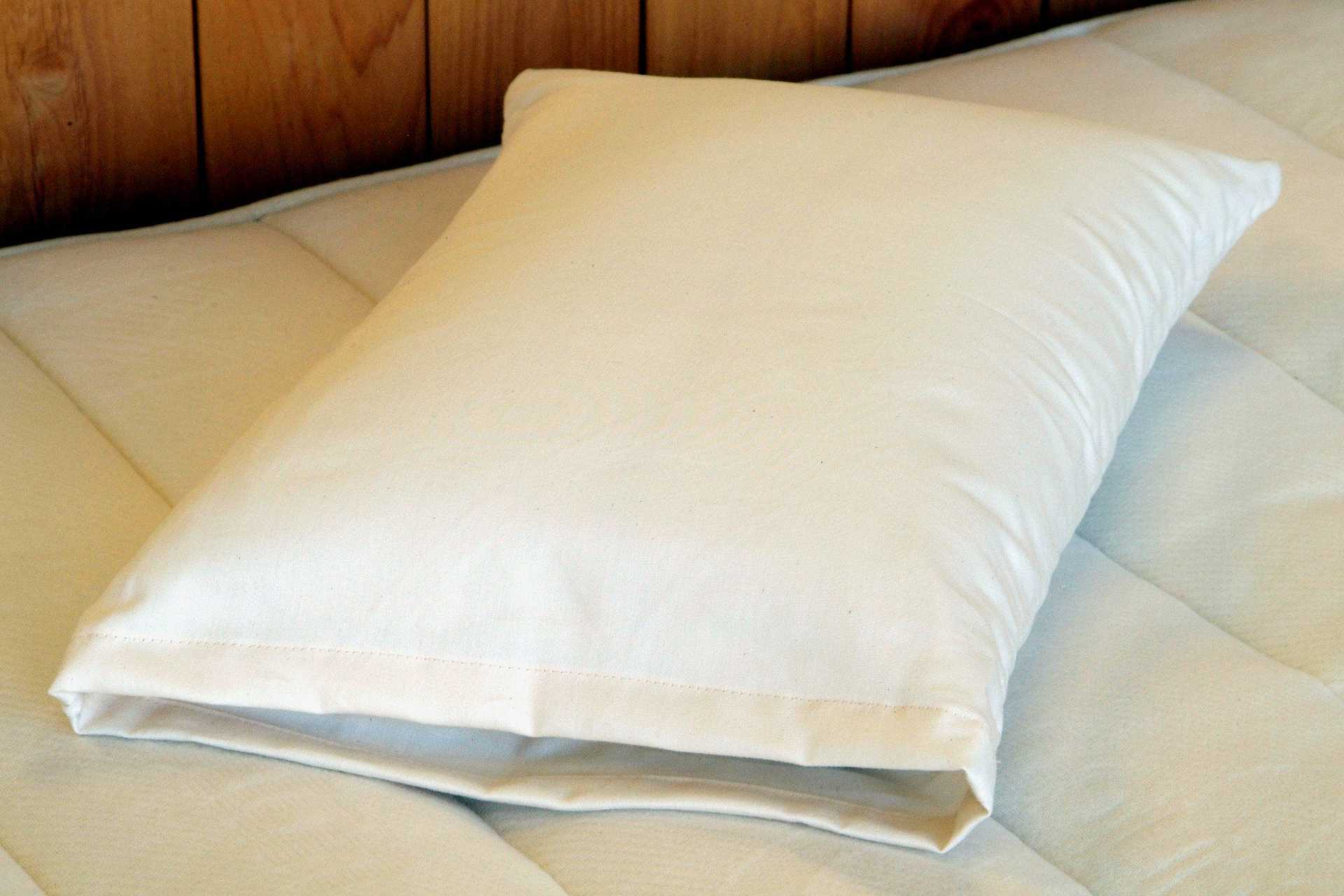
As one example of a children’s accessory made with natural materials, the Snuggle Pillow has a Premium Eco Wool fill, an organic cotton sateen cover, and a separate cotton case. Its stated care instructions distinguish between the pillow, which is spot clean only, and the removable case, which can be machine washed. That distinction illustrates a useful habit: check the care directions for each component rather than assuming the whole item can be laundered in the same way.
The pillow is described as a lightweight, packable source of support for youngsters at home or away. It should not be treated as an infant sleep product or placed in a baby’s crib. Families should follow age-appropriate safe-sleep guidance and use pillows only in settings and for children for whom they are appropriate. A product’s soft materials or child-focused description does not override those precautions.
Alpaca blends: warmth without assuming bulk
Alpaca blends can help explain why warmth and weight are not identical. A textile containing alpaca may feel warm without having the dense, heavy hand some people associate with winter layers. Cotton in the blend can contribute a different kind of breathability and structure. But fiber percentages alone do not tell the full story: yarn thickness, knit density, and the size of the finished item all help determine how it feels in use.
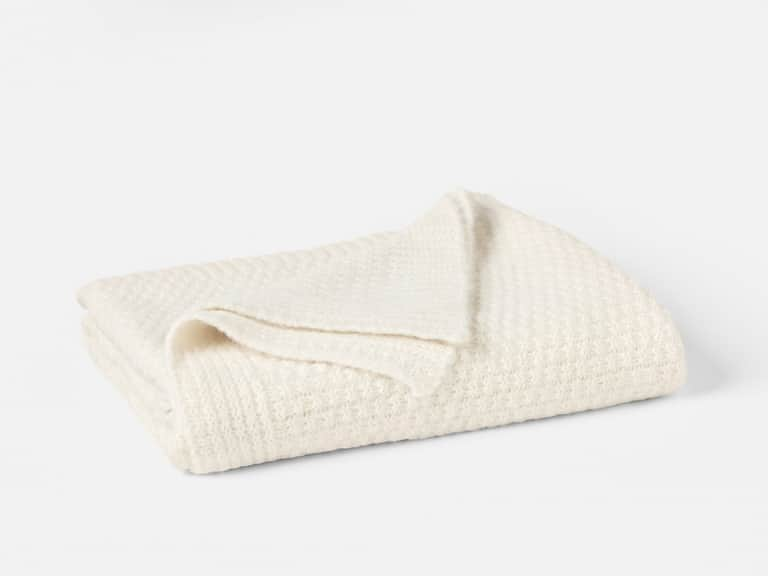
The Cordillera Alpaca Cotton Knit Throw is a 56 percent alpaca and 44 percent Pima cotton textile, made with a seed stitch. It is described as soft and fuzzy, with lightweight warmth, and its care instructions specify dry cleaning. It provides an example of how fiber blend and stitch can shape a home textile’s character—not a recommendation to use an adult throw as an infant blanket. For babies, caregivers should choose items expressly intended for the child and follow safe-sleep advice.
This distinction is important because materials are often discussed as if they determine use by themselves. They do not. A fiber may be comfortable and a knit beautifully made, yet an item’s size, shape, construction, and intended purpose still matter. In nursery decisions, assess the whole textile and the situation in which it will be used, not only the appealing qualities of a particular fiber.
Gentle care begins with the label
Care is part of a textile’s design. Following the label can help preserve a knit’s shape, reduce avoidable wear, and protect delicate fibers. Before washing, sort items by color and fabric type, fasten closures where applicable, and turn garments inside out if the instructions recommend it. Avoid combining delicate knits with rough items, hooks, or zippers that could catch loops.
When a label calls for a cold, gentle wash, use the specified cycle and a mild detergent suited to the textile. Do not assume that a low-temperature wash is appropriate for every fiber blend. Likewise, tumble drying should be used only when allowed. Heat and vigorous tumbling can contribute to shrinkage, stretching, or surface changes in some knits. If the instructions call for air drying, support the textile so its weight does not pull it out of shape.
For a wet knit, avoid twisting or wringing it. Pressing out excess water gently with a clean towel can reduce stress on the loops. Lay the item flat when the care guidance calls for it, smooth it toward its original dimensions, and let it dry fully before storing. These steps are especially useful for pieces that may stretch when damp, although the garment’s own instructions should always take precedence.
Not every nursery textile is machine washable. The Cordillera throw’s dry-clean-only direction and the Snuggle Pillow’s spot-clean-only guidance for the pillow itself show why care claims must be read item by item. If a stain occurs, follow the manufacturer’s recommended method and test any treatment in an inconspicuous area when appropriate. Keep textiles thoroughly dry before putting them away; lingering dampness can create odors and damage fibers.
Safe sleep is a separate question from softness
Comfort and safety overlap, but they are not interchangeable. For infants, safe-sleep recommendations generally call for a clear sleep space without loose bedding, pillows, or soft objects. A knit blanket’s breathability does not make it suitable for an unattended infant sleep environment. Nor does an organic label or a natural fiber change the basic guidance about what belongs in a crib.
Families should consult current recommendations from trusted public-health authorities and their child’s clinician, particularly when a baby was born prematurely or has individual medical needs. Use wearable sleep clothing or other products only as directed by their manufacturer and in a way that aligns with applicable guidance. Avoid adding layers that could lead to overheating, and consider the room temperature and the child’s clothing rather than relying on a loose blanket for warmth.
Outside the sleep space, a blanket may have a role in supervised use, depending on the child’s age and circumstances. Keep it away from the face, monitor the child, and stop using it if it is damaged or has loose threads. A textile intended for an older child’s travel or lounging should not be repurposed for an infant without checking its intended use and relevant safety advice.
A practical checklist for choosing nursery textiles
When comparing nursery textiles, slow down long enough to match the item to its actual job. A useful checklist keeps attractive descriptions in perspective and makes the decision more concrete:
- Start with intended use. Is the item clothing, a supervised-use blanket, a pillow for an older child, or décor? Do not assume one use is safe because another is.
- Read the full fiber composition. Note whether the textile is all cotton, an alpaca-cotton blend, or another combination. Blended fibers can have different care needs from single-fiber fabrics.
- Look at construction. Consider knit density, stretch, edging, closures, and any details that may catch, loosen, or change with laundering.
- Check the care directions before buying or using. Confirm whether the textile is machine washable, spot clean only, or requires dry cleaning, and make sure that routine fits your household.
- Interpret certifications precisely. A certification applies to defined criteria and scope. Verify the stated certification rather than treating broad sustainability language as proof of every quality claim.
- Follow safe-sleep guidance independently. Fiber, softness, and breathability do not establish that loose bedding or a pillow belongs in an infant’s sleep space.
- Reassess with use. Check for stretched openings, fraying, loose yarn, or other wear, and repair or retire the item as appropriate.
Building a calmer, more considered textile routine
A thoughtful nursery does not need an abundance of layers. A small set of textiles chosen for clear purposes can be easier to care for and easier to evaluate. Keep care labels accessible, separate items that require different washing methods, and store clean textiles in a dry place. If a product has removable components, note which parts can be washed and which need spot treatment. Such simple routines help prevent accidental damage and reduce guesswork.
For families choosing organic cotton, the practical questions remain important: how is the knit constructed, what does its label say, and where will it be used? For those considering alpaca blends, ask the same questions, adding whether the item’s care requirements are manageable. The answers are more useful than a single ranking of fibers because comfort is personal and context-specific.
Nursery textiles are most successful when their qualities are understood rather than assumed. Fiber influences feel; stitch shapes stretch and texture; finishing affects the surface; care affects longevity. And safe use depends on the child’s age and setting, not simply on a fabric’s softness. Taken together, these details turn a blanket or knit accessory from an attractive object into a considered choice—one that fits the family’s routine while respecting the needs of a little one.