Textiles & Home
Coyuchi Bedding: A Guide to Fiber, Texture, and Finish
A bed’s character is built one textile decision at a time. Fiber affects warmth and breathability; knit and weave shape the hand of the cloth; finishing and color determine how a piece looks, wears, and fits into daily life. Understanding those details makes it easier to compare bedding by more than its first impression.
Published October 31, 2026
Start with the material, not the adjective
Words such as “soft,” “cozy,” and “lightweight” can be useful, but they describe impressions rather than construction. Two fabrics may both feel soft in a showroom and behave very differently after a night of sleep, a change in weather, or repeated laundering. Fiber content provides a more dependable starting point: it helps explain how a textile may handle warmth, moisture, airflow, and care.
Cotton, wool, and blends each bring distinct qualities to bedding and home textiles. Cotton is a plant fiber valued for its familiar feel and breathability. Wool is an animal fiber that can provide insulating warmth while helping manage moisture. Blends combine fibers in an effort to balance properties, though the result depends on the specific fibers, their proportions, and how they are made into fabric.
Those broad differences are only the beginning. A cotton fabric’s weight and weave can make it crisp or supple; a wool knit may feel airy or substantial depending on its structure. Fiber origin and processing also matter. When comparing textiles, it is useful to read the full specification alongside the description, noting the material, construction, place of origin when provided, and care instructions.
Cotton: breathable, familiar, and shaped by construction
Cotton has a long-standing place in bedding because it is comfortable against the skin and can be woven or knitted in many ways. Its performance is not fixed by the word “cotton” alone. A smooth, tightly woven cloth feels different from a textured knit, and a lightweight cotton layer behaves differently from a dense one. The structure can change drape, surface character, and the sense of warmth.
In a bedroom, cotton often suits people who want a natural-feeling textile that can be used across seasons. Breathability can make it a practical choice for sheets and light layers, while a thicker cotton knit may feel more enveloping. Organic certification, where stated, speaks to specified agricultural or processing standards; it does not by itself tell a reader how plush, durable, or warm a finished textile will feel.
Care is another part of the cotton story. Some cotton items can be machine washed, while others need gentler handling to preserve their shape and surface. Follow the product’s specific instructions rather than assuming that every cotton textile can take the same wash cycle. Temperature, agitation, drying method, and whether a piece is laid flat or tumbled can all affect its long-term appearance.
For an example of cotton knit structure in a home layer, the Downtown Company Cable Knitted Throw combines cotton and wool in a cable pattern. Its construction offers a useful illustration of how a recognizable stitch can create relief and shadow across a surface. It is a throw rather than a sheet or duvet cover, but the same principle applies to bedding: the pattern is part of the textile’s physical character, not merely decoration.
Wool: warmth with a different kind of weight
Wool is often associated with cold-weather comfort, yet its appeal is not simply that it feels warm. Wool fibers can help regulate temperature and manage moisture, which is one reason wool appears in blankets and comforters as well as clothing. A wool layer may feel insulating without necessarily feeling heavy, though the finished experience depends on the amount of fiber, the fabric structure, and the way the item is assembled.
In bedding, wool may appear as fill, a woven covering, or a knitted layer. Those forms serve different purposes. A wool-filled comforter creates insulation within a larger bed covering; a wool throw offers a movable layer; and a wool-blend knit presents fiber through a visible surface pattern. Comparing these items by material alone overlooks their different roles and constructions.
Wool also calls for careful attention to maintenance. Some wool textiles can be aired or spot cleaned, while others require professional cleaning or specific washing methods. Care labels are not a minor footnote: they help establish whether an item is practical for a particular household. Consider how often the piece will be used, whether it is likely to need frequent cleaning, and whether its recommended care fits your routine.
Color and texture can make wool especially expressive. Its natural surface may read as softly matte, while a brushed or fuzzy finish can create a more relaxed appearance. A finely structured weave tends to look quieter from a distance; a pronounced knit pattern catches light and makes the textile a visual feature. Neither approach is inherently better. The right choice depends on whether the bed is meant to feel serene, richly layered, or somewhere between the two.
Blends: balance is a design decision
A blend pairs fibers with different characteristics. Cotton may contribute breathability and durability, while alpaca can add warmth and a soft, fuzzy hand. The resulting fabric is not a simple arithmetic average. Fiber length, yarn construction, proportions, and knitting or weaving method all influence the final textile.
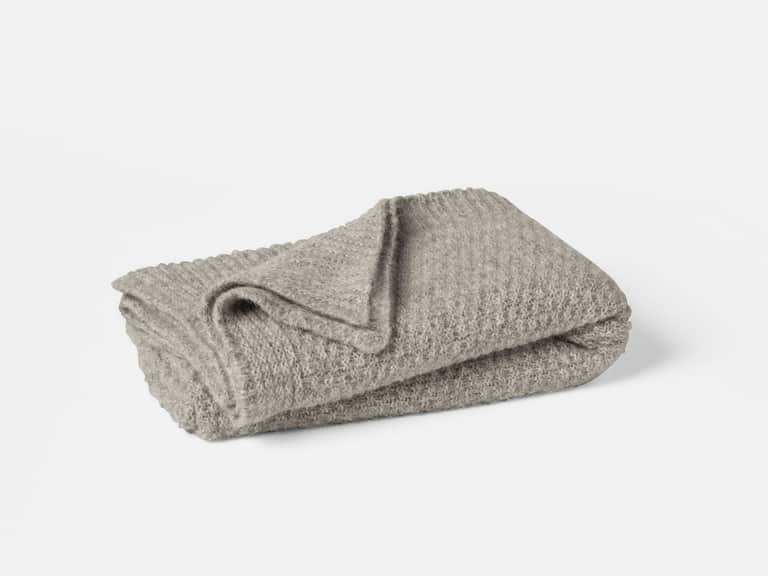
The Cordillera Alpaca Cotton Knit Throw is one example: it is made with 56% alpaca and 44% Pima cotton, in a seed stitch construction. Its description notes lightweight warmth from alpaca and breathability and durability from cotton. The seed stitch gives the surface a clearly textured look. It is a home throw, not bed linen, but it demonstrates how a fiber blend and stitch pattern work together rather than independently.
Blends can be helpful when a single fiber does not meet every need. A person looking for warmth without a dense feel may prefer a lighter blend; someone prioritizing easy washing may focus on care details first. There is no universal formula that makes a blend superior. It is more useful to ask what the textile is intended to do and whether its fiber mix, structure, and maintenance requirements align with that purpose.
Fiber percentages deserve a close read. A textile described as a cotton blend may contain a small or substantial share of another fiber, and those proportions can alter the hand and care needs. The label cannot predict every aspect of comfort, but it gives a concrete basis for comparing products. When a description includes origin or sourcing information, treat it as another point of context, not a substitute for construction and care details.
Knit or woven: the structure changes the experience
Fiber is the raw material; structure is how that material becomes cloth. Knitting forms interlocking loops. This construction often gives fabric flexibility and a softly dimensional surface. Depending on the stitch, a knit may be compact, open, ribbed, or richly patterned. The loops can make the fabric feel more yielding than a woven textile, although gauge and yarn choice matter.
Weaving interlaces lengthwise and crosswise yarns. It can produce a smooth, crisp surface, a subtle grid, or a more pronounced pattern. A closely woven textile may feel structured and hold a neat profile, while a looser construction can feel more relaxed. Bedding made from woven fabric often has a different visual formality from a textured knit layer, but both can contribute to a balanced bed.
Stitch names offer clues to appearance. Cable knitting creates raised, rope-like lines. Seed stitch alternates knit and purl stitches to produce a pebbled surface. Ribbing makes vertical ridges and can help an edge stretch or recover. A fishbone stitch creates a directional pattern that may influence how a textile drapes. These structures add texture without requiring bright color or elaborate ornament.
Texture is felt as well as seen. Raised stitches can create a tactile surface and cast small shadows, making a neutral textile visually active. A smooth weave can provide calm and contrast against a patterned quilt or knitted blanket. When choosing pieces together, think in terms of variation: a bed does not need every layer to make the same textural statement.
Finish, color, and the light in a room
Finishing refers to treatments and processes applied to fabric after or during its construction. The finish can influence softness, surface appearance, drape, and ease of care. A brushed surface may feel more velvety or fuzzy; a smooth finish can appear cleaner and more polished. Finishes are not always evident from a product name, so detailed descriptions and care notes are worth consulting.
Color adds another layer of interpretation. A pale neutral can make a textured stitch easier to see because light traces its raised and recessed areas. Deep colors may emphasize the overall form while making small details less prominent. Heathered yarns combine tones in a way that softens the appearance of a solid color. These effects can change with daylight, warm bedside lighting, and the colors of nearby furniture.
Rather than building a bed around a single matching set, consider how surfaces relate. A smooth sheet can sit beneath a textured coverlet; a restrained palette can accommodate one strongly patterned throw. The objective is not visual uniformity but a coherent mix of scale, color, and hand. A fine weave and a chunky knit can coexist because they offer different kinds of detail.
Finish also influences the impression of weight. A textile with a fuzzy nap may appear warmer than a smooth fabric of similar weight. A lofty knit can look substantial while remaining relatively light. This is why photographs and product descriptions should be read alongside measurable facts such as fiber content, dimensions, and care instructions. Appearance is informative, but it is not a full substitute for specifications.
Care is part of the textile’s design
Comfort and appearance matter, but the best bedding choice is also one that can be maintained realistically. Washability varies by fiber and construction. Cotton may tolerate a gentle machine wash when the care label allows it; delicate wool or alpaca pieces may call for dry cleaning. A knit can stretch or lose its shape if it is handled roughly, while a woven fabric may be affected by high heat or excessive agitation.
Before buying, look for clear care guidance and consider what it means in practice. Is the item intended for everyday use or occasional layering? Can it be washed at home, or does it require specialized care? Is spot cleaning acceptable for its likely use? The answers help distinguish a beautiful textile that suits your routine from one that may become inconvenient.
When washing is permitted, sort by color and follow the stated temperature and cycle. Avoid treating more detergent or more heat as a shortcut to cleanliness. Drying instructions matter just as much: high heat can affect dimensions and surface feel, while drying flat may help some delicate knits retain their shape. If the label recommends professional care, do not assume that a gentler home wash is an equivalent alternative.
Durability also depends on use. Rotating throws, keeping textiles away from rough edges, and storing seasonal items clean and dry can help limit wear. A visible change in texture is not always damage; some natural fibers soften with use. Still, pilling, fading, shrinkage, and stretching can be reduced by matching care to the material and construction rather than relying on a one-size-fits-all routine.
A practical framework for comparing bedding
When evaluating bedding, break the decision into a handful of questions. Begin with function: is the item a sheet, cover, comforter, blanket, or decorative layer? Then consider the climate and personal preference. A warm sleeper may want breathable, lighter layers that can be adjusted; someone in a cool room may value insulation and a more substantial hand.
- Fiber: Identify the materials and their percentages. Consider how cotton, wool, or a blend relates to your priorities.
- Construction: Note whether the textile is knitted, woven, quilted, or filled, and look for stitch or weave descriptions.
- Surface: Decide whether you prefer smooth, crisp, fuzzy, nubby, or raised texture.
- Weight and drape: Look for dimensions and descriptions that clarify whether the piece is light and flexible or more substantial.
- Care: Check the full instructions and weigh them against how frequently the item will be used.
- Color and style: Consider how the textile will sit beside existing sheets, furniture, and other layers.
- Origin and standards: Review any stated sourcing or certification details, while distinguishing them from claims about comfort or performance.
This framework prevents a single appealing feature from dominating the decision. A soft hand is valuable, but it should be considered alongside warmth, care, and intended use. Likewise, a striking stitch pattern may bring visual depth, yet a textile’s maintenance requirements still matter. The best choice is the one whose material and construction suit the person who will live with it.
Building a layered bed without losing clarity
Layering can make a bed more adaptable and more visually considered. Start with a comfortable base, then add warmth in pieces that can be removed or shifted. Sheets establish the closest contact with the skin. A blanket or coverlet adds another level of texture and insulation, while a comforter provides a larger, more unified source of warmth. Throws can serve as movable accents at the foot of the bed or across a chair nearby.
Each layer does not need to be made from the same fiber. A breathable cotton base can be paired with a wool comforter or a textured knit throw, provided their care requirements are understood. Mixing materials brings contrast in both feel and appearance. The key is to use layers with a clear purpose rather than accumulating fabric simply for fullness.
Proportion helps keep the arrangement composed. Large-scale textures can anchor a bed, while finer weaves offer visual rest. Restrained colors make differences in construction more noticeable; varied colors can emphasize individual layers. If a room already has patterned curtains or upholstery, simple bedding may provide balance. In a quieter room, a pronounced knit or subtle plaid can supply character without overwhelming the setting.
Think of comfort as a system, not a property of one item. Temperature, mattress feel, room ventilation, and personal preference all affect how bedding performs. Fiber descriptions can guide expectations, but no material guarantees the same sensation for everyone. If possible, assess hand and weight in person, and use specifications to make a more informed comparison when shopping remotely.
A closer look at textile examples
Several home textiles illustrate how construction changes the role of a natural fiber. The All-Season Wool Comforter uses wool fill within an organic cotton sateen shell. Its two joined comforters can be adapted by season, and the construction includes hand-tufting and perimeter stitching to help keep the fill in place. The product description specifies airing and spot cleaning, with machine washing only under restricted conditions. Those details show why care and internal construction belong in the same conversation as fiber.
For a more visibly textured layer, the Cordillera throw’s seed stitch gives the alpaca-cotton blend a surface that differs from the smoother shell of a comforter. The Downtown Company throw uses a cable pattern in a cotton-wool blend. Both examples make a useful point: material tells part of the story, while the structure determines how that material presents itself to the eye and hand.
These distinctions are useful well beyond any particular product. A bedding label can tell you what a piece is made from; construction details help explain how it may feel and fall. Together, those facts form a clearer basis for comparison than broad language about luxury or softness. The practical question is not simply which fiber sounds most appealing, but which combination of fiber, structure, finish, and care makes sense for the room and the routine.
The quieter value of knowing what you are touching
Textiles shape a room through small, repeated encounters. A sheet is felt every night. A blanket gathers around the shoulders on a cool morning. A textured throw adds a tactile note to an otherwise spare bedroom. These experiences may seem ordinary, but they are precisely why the details deserve attention. Fiber and construction are not technical trivia; they help explain the daily life of an object.
For Coyuchi bedding and related home textiles, a thoughtful comparison begins with clear questions: What is the fiber? How is the cloth made? What does the surface feel like? How much warmth is intended? What care will preserve it? The answers help turn a product description into a practical guide rather than a collection of appealing adjectives.
Natural fibers can offer comfort, character, and a connection to material traditions, but they are not interchangeable and do not remove the need for care. Cotton, wool, and blends each have strengths, and no single material is right for every sleeper or climate. Once texture, finish, and maintenance enter the picture, the choice becomes more personal—and more precise.
A well-considered bed does not depend on excess. It depends on layers that make sense together: a comfortable foundation, warmth suited to the room, and surfaces whose textures complement rather than compete. Read the specifications, notice the construction, and choose with everyday use in mind. The result is not merely a polished bedroom. It is a more informed relationship with the materials that make rest feel like rest.